Vintage books are not the only ones affected by the CPSIA interpretation of which books are exempt from the testing and certification rules. According to the Statement of Commission Enforcement Policy on Section 101 Lead Limits, dated February 6, 2009, which grants the exemption to ordinary books:
"The term "ordinary book" in this context means one that is published on cardboard or paper printed by conventional methods and intended to be read. It excludes children’s books that have plastic, metal or electronic parts. "
This definition is a footnote to Section 5 at the bottom of page 4 of the document. You can read the whole pdf here. In other words, this definition of "ordinary book" excludes many popular children's books: for example, the "touch and feel" baby books like the classic Pat the Bunny by Dororthy Kunhardt; cookbooks and craftbooks with metal or plastic spiral or comb bindings; what the trade calls "book plus" formats (for example, a book packaged with a stuffed animal, one that incorporates a finger puppet or some other toy element, or a project book that incorporates supplies, like the enormously successful Klutz line and many American Girl craft books); many cloth and all vinyl baby books; and those horrid things that have buttons kids push to make screechy electronic sounds at the appropriate moments (or inappropriate ones, as the case may be - personally not sorry to see those go).
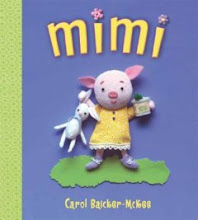
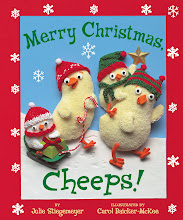
There's lots of gray area too: what about paper and board books that seem no different from other ordinary books except that they're intended more for play than reading, like the ones that form a play set or include paper dolls? What about pop ups that have a fabric element (since fabric is deemed safe too)? Books with metallic lettering or foil along the binding (like the Little Golden Books) or gilt edges like many children's Bibles?I'll discuss these issues in later posts, but for today I'm going to focus on books with stapled bindings (which in the trade are called "saddlestitched" bindings). The books above and in the top photo below are typical examples of staple-bound paperbacks, held together not with glue or thread but with two small metal staples. Extra tall picture books might have three staples. (The ones in the second photo before are examples of glued bindings, called "perfect bindings.) These stapled books are tremendously important to literacy groups, schools, and other organizations that promote reading.

The staples are clearly metal and equally clearly part of the book, which under the CPSC's earlier definition of an ordinary book seems to make them subject to the same testing and certification requirements as other non-exempt children's products. I say "seems" because there's some confusion about whether they are in fact included in the ban, confusion that arises in part because of CPSC's inconsistent language in defining an "ordinary book." For example, in their more recently published Guide to Small Businesses, Resellers, Charities, and Crafters, a guide that nonprofit literacy groups, thrift stores, and small used booksellers might well rely on to make decisions about which books it's okay for them to distribute, an "ordinary book" is defined this way:
Children’s books printed after 1985 that are conventionally
printed and intended to be read, as opposed to used for play"
Note the absence of any language about metal, plastic or electronic parts. I've come across similarly abbreviated definitions of an "ordinary book" in other documents posted by CPSC. I spoke with a lawyer about whether this change in the wording could be interpreted to reflect an actual change in the definition. (While not an expert on CPSIA or product liability in general, this lawyer deals pretty much daily with other federal regulatory agencies.) He said that typically agencies are extremely precise about their language when offering guidance, so most of the time it would be reasonable to assume that yes, they'd changed their minds about the definition if they changed the wording. In this case though, because the language occurs in a glossy brochure written in layman's language, he'd caution against relying on the more casual definition and advise you to consult with someone at the agency.
Good luck with that.
I've emailed and called CPSC dozens of times now with specific questions about this and other issues. I assume my emails go through, but my calls to the ombudsman's office don't. I'm working on a couple assigned articles about the CPSIA, which makes me a member of the press so I tried the media number early in the week and did get through to someone - who couldn't answer my questions. Late Friday someone else finally called me back (after I got my congressman's office to intervene for me) but unfortunately I wasn't home and he didn't try my cell phone despite having been given both numbers. So I still don't know whether staples are in fact okay, but I'm inclined to think not.
I'm not the only one. Many booksellers are removing the stapled books from stock (see this post from semicolon and the coverage on books from Walter Olson at overlawyered.com). And other groups are simply panicking. I've spoken with representatives at several large literacy organizations. At Reach Out and Read, a very successful program in which pediatricians "prescribe" books and give out both books and lessons on reading to youngsters at regular health check ups (check out their website here), the coordinator opted to pay for testing of their inventory after doctors and parents expressed concern about the stapled copies that are the bulk of the books they give out to kids over three - and that's money she now doesn't have to buy new books or use to train doctors and nurses in teaching literacy. As she expected, all the books passed with flying colors. (In an earlier post, I linked to an article about this group's concerns - read it here if you missed it.)
But the most common reaction I get from groups that distribute these books to schools, from publishers to schools to other literacy organizations is "Huh?" If they've heard of the law, most have some significant area of misinformation: "It doesn't apply to us because we're nonprofit," or "They exempted all books except vintage ones," or "Someone would have notified us if we were supposed to comply with that." But the most common response is, "I have never heard of that law and I have no idea what you're talking about." (So far, no school district I've called has heard of the law at all so of course they are taking no steps to comply with it. One teacher I chatted with though noted that she regularly assembles packets of papers on a topic and staples them together herself or has the district bind them together with a plastic comb binding if they're thick and will get heavy use - guess that makes schools manufacturers of potentially deadly books too in need of testing and certification too.)
But back to stapled books. Why don't publishers and sellers just switch to glued bindings for their picture books and easy readers, if the stapled ones are a problem? After all, there are other reasons too that make stapled bindings less desirable than perfect bindings - the stapled books have no spine so it's hard to find a shelved book, they also often have lighter-weight covers and look more like a pamplet than a traditional book, and there's always the risk of getting poked by a bent staple, or swallowing one if you're inclined to eat your books (as CPSIA presumes).
 First, there are as many reasons to prefer the stapled bindings as to dislike them. Glued bindings just don't hold well unless there are lots of pages, and a standard picture book has only 32 pages. You may have had the experience with a perfect-bound book of pages coming loose (like the book above - a copy of Alfie's Feet by Shirley Hughes, one of my favorite children's book author-illustrators) or even coming out all together and getting lost. The stapled bindings which fasten folded pages rather than individual sheets almost never lose pages unless they're ripped. In addition, the stapled bindings generally lay flat and stay opened, an advantage for little guys and kids just learning to read, who may find juggling holding a book open and steady to be just one task too many on top of the challenging job of deciphering the words.
Sometimes, especially with older books or ones that get heavy use like in classrooms, the glue in a perfect binding just gives out all together, and the whole book separates into chunks which come loose from the cover, as with this copy of Angus and the Ducks by the talented Marjorie Flack.

I'm going to blog about this vintage book in a separate post, so check back if you want to learn more about the notable book about the curious little Scottie .
The main advantage of the stapled bindings, though, is cost. Sticking a couple of staples through the pages and cover in one fell swoop is both faster and way, way cheaper than applying glue, letting it dry, then gluing the cover on and letting it dry again. The coverstock can also be thinner, which means it's cheaper, and in addition these books are often printed on thinner, lower quality paper.
Publishers can thus offer these stapled picture books at a pretty substantial discount, which is why they're common in the book club offerings, stocked by the checkout counter at the supermarket, popular with libraries with smaller budgets or who want to stock some books with time-limited appeal or lesser literary merit, used for classroom collections of literary readers, and much used for literacy programs that do free book distributions.
Many of the groups offering these inexpensive stapled books (like the book clubs, many of the larger publishers, etc.) also award bonus points that can be redeemed for classroom books or other supplies (like math manipulatives) when students order books, and others kick in extra books or even deeper discounts to organizations that buy in bulk.
Most of the book distribution programs, like RIF (Reading is Fundamental), Reach Out and Read, First Book, and Beginning with Books are nonprofits with tight budgets and a determination to get not just one new book but many in the hands of needy kids at risk for low achievement. These programs are consistently successful and have the research to prove it, but they don't have the funds to buy as many hardcover or even higher-priced paperbacks for all the kids they try to serve. This matters because research has shown that kids who own more books are more likely to become both capable and eager readers (see this pdf of a study from Columbia University's Teacher College as an example, and see these links to studies about the relationship between the number of books a family owns, poverty and outcomes in the U.S. at the First Book website).
If these literacy groups have to forgo both older donated books (which some distribute and others resell as fundraisers) and either or test or discard their inventories of the affordable stapled books, their programs will be severely affected and many fewer children will get books in their hands this year. It's unclear what will happen to the prices or availability of these books once testing and certification of non-exempt products goes into effect in February, 2010 - but it can hardly be good.
And now to why this really, really matters, in terms of children at risk for lead poisoning. Right now, there are no effective medical treatments for kids with elevated blood levels. For kids with dangerously high levels, doctors do chelation therapy which removes heavy metals, but it's risky and not effective at the low levels more commonly seen. Bellinger, one of the major researchers on lead poisoning, has noted that there is not a consistent dose-effect relationship between lead and neurological functioning (information I suspect was likely missing from the Congressional hearing on this issue). See this abstract of a journal article on the research here. Based on his review of the body of literature and his own research, Bellinger hypothesizes that an enriched environment can prevent or ameliorate the effects of lead exposure, which is especially significant in light of the absence of an effective medical treatment. In the journal Pediatrics, Bellinger noted (emphasis added is mine):
Finally, characteristics of a child’s rearing environment might influence the
toxicity of a given lead dose.47 Lead seems to be similar to other biological risks, such as low birth weight, in that children from environments that offer fewer developmental resources and supports express deficits at a lower blood lead level than do children from more optimal environments45,48
and show less recovery after exposure.43
In his book Human Neurodevelopmental Toxicology (
at $250 from Barnes and Noble not a cheap read, but you can view the relevant pages on p. 76 at Google Books
here) Bellinger asserts that his idea about the benefits of enriched environments is also supported by animal studies (which are critical in lead research because experimental studies obviously cannot be conducted on human beings). For example, in one animal study, lead-poisoned rats raised in an enriched environment outperformed non-poisoned rats raised in a regular rat environment and didn’t differ significantly from non-poisoned rats raised in an enriched environment. These findings are also consistent with the every day observations you see in blogs and comments to news articles every where: "If lead is always so bad, why are people like me who were obviously exposed to lead as a child just fine?" It's also consistent with the research going back many decades that consistently shows that children who read a lot (and thus would likely have had the most exposure to lead in books) typically have better achievement scores and lower rates of the behavioral problems like ADHD and aggressiveness than kids who rarely read (and thus presumably have the lowest exposure to lead in books).
And, what's one of the easiest, cheapest ways for a low-income parent to provide an enriched environment for his child? Books of course - which are free through the public library and book distribution programs, and inexpensive through used booksellers and book clubs.
Or used to be. Good luck with that post-CPSIA.
P.S. Reviewing the research on lead toxicity is tremendously difficult for the average person. Not only does it involve slogging through lots of technical language and reams of data and statistics, it's nearly impossible for someone who doesn't have access to a university library or a huge discretionary budget to obtain whole journal articles (you can often find abstracts on Google Scholar) and book-length professional summaries and analyses of the literature. It might not matter, except that folks like Jared, a staffer at the Senate commerce committee, informed me that the only thing likely to push the DeMint bill out of committee is high quality scientific research suggesting that the law is over-reaching. Since not only is conducting research like that out of the reach of the typical person affected by this law, but looking it up is too, it's going to be hard for the people who care to build the case that will persuade Congress to try again.


 These books above are all well used cheap paperbacks, all printed in the 1970s or earlier. The pages have yellowed a bit and a couple of the most heavily read have mangled spines (like the copy of




 Posts
Posts